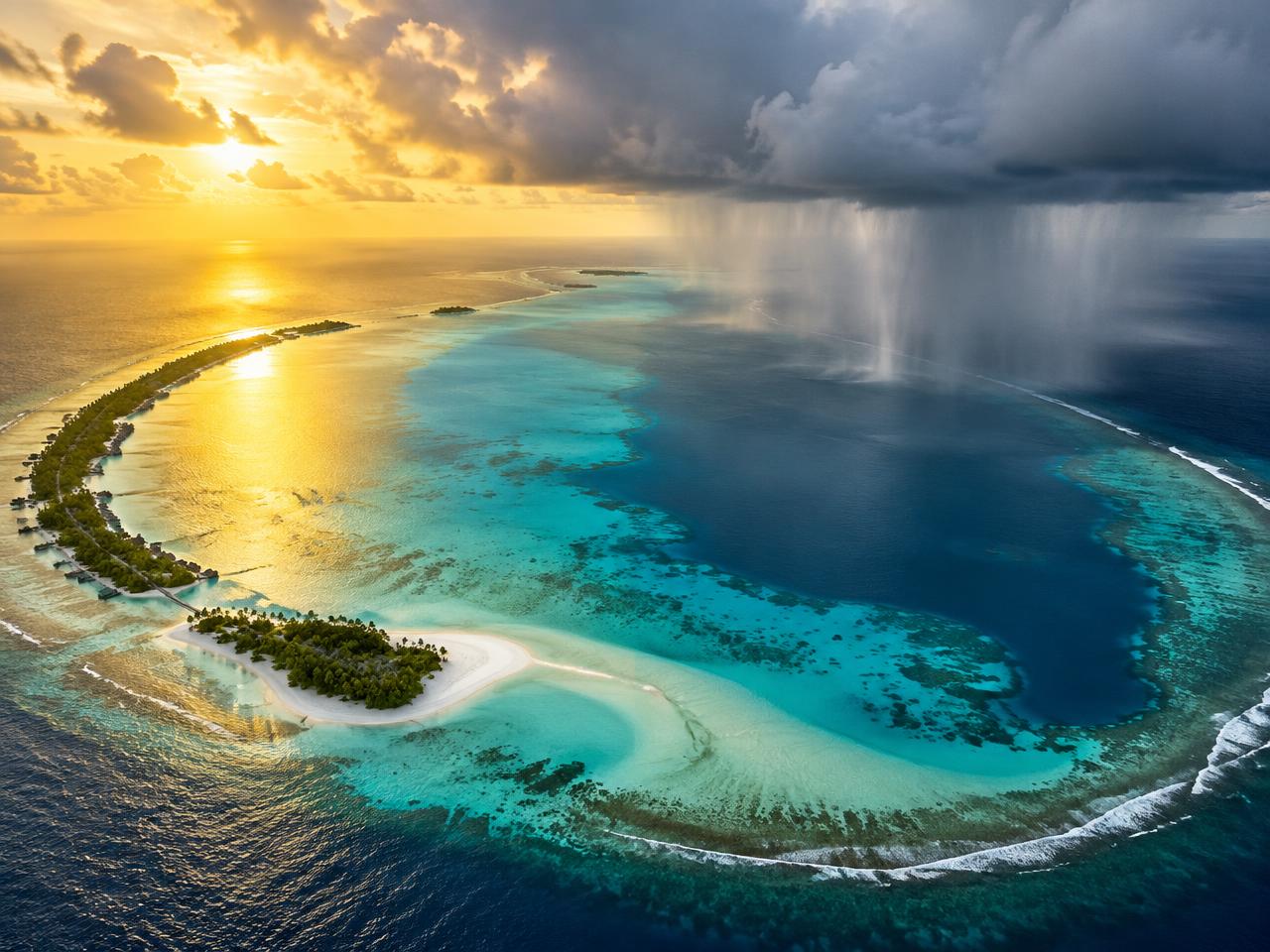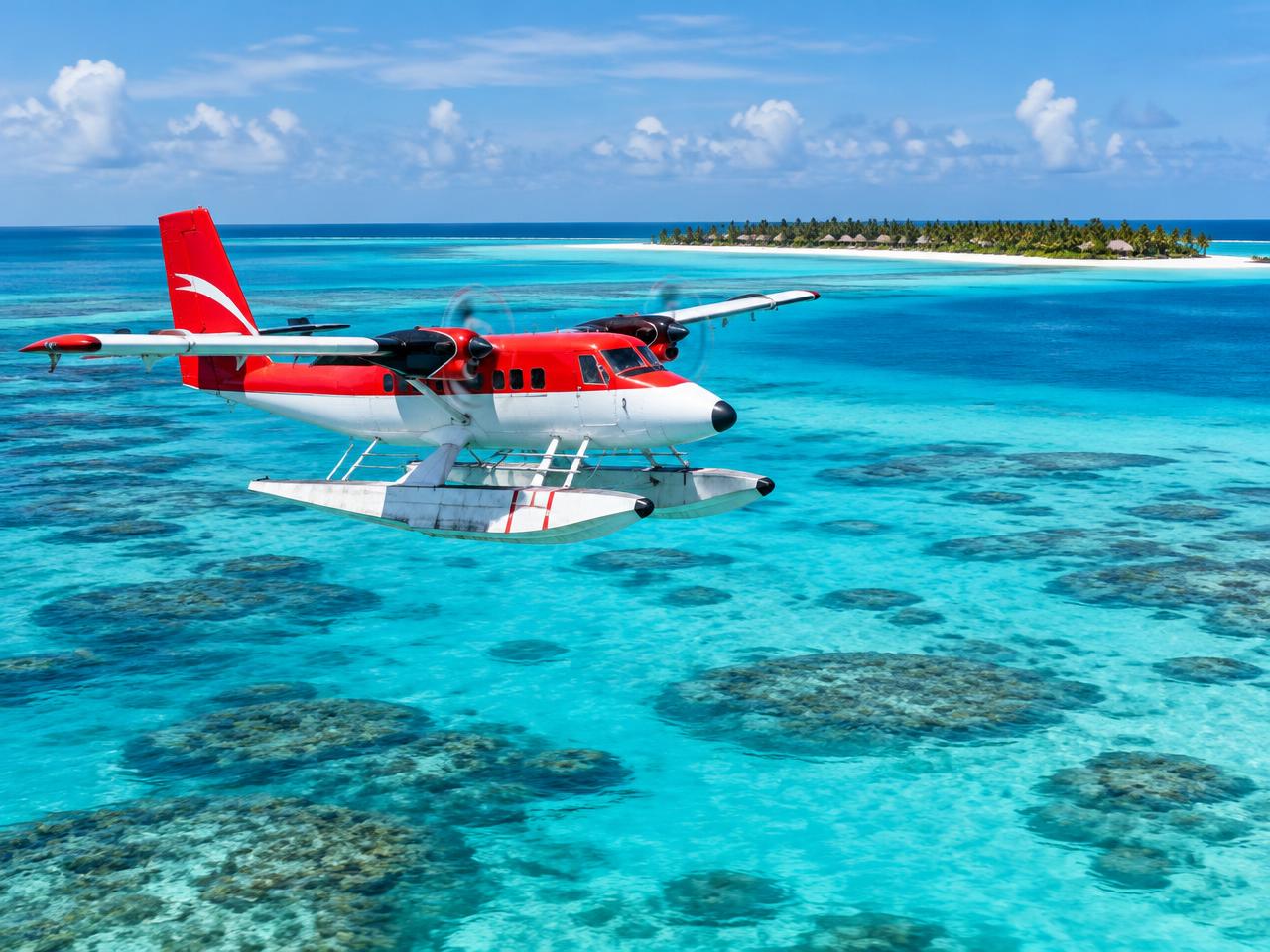
A house reef is the living coral shelf that runs along an island's own shoreline — no boat, no booking, no briefing video. You walk off the sand and it's there. For most guests it's the single strongest reason to choose an island with a good one, and it's the thing we ask about first when a client tells us they're travelling to snorkel.
Reading the reef before you swim
Two features decide whether a snorkel is memorable or miserable: the drop-off and the channel. Where the shallow lagoon floor suddenly falls away into deep blue, that's the drop-off — the reef wall, where the fish concentrate and where you'll want to be. A channel, or kandhu, is a gap in the reef where the tide pushes through. Channels are where the big animals gather, and they are also where the current is strongest.
The rule we give every guest: enter up-current and let the water carry you home. If you can see the surface of the channel running like a river, do not enter it. Ask the dive centre which way the tide is moving that morning — it changes with the tide, not with your mood, and the answer costs you nothing.
Gear, and the one thing people forget
A mask that seals, a snorkel, and fins. The fins matter more than people expect: they do the work so your arms don't, and they let you hold position in a light current without thrashing. Most resorts lend all three. A rash vest or a full lycra suit beats a bottle of sunscreen for a midday swim, and it keeps the chemicals out of the water you're admiring.
The thing people forget is buoyancy. Coral is alive and brittle, and a knee on a brain coral kills it. Never stand on the reef to rest — flip over onto your back and float, or swim to the sandy patch you can see beyond the coral. If you need a break, that's what the sand is for.
What's actually down there
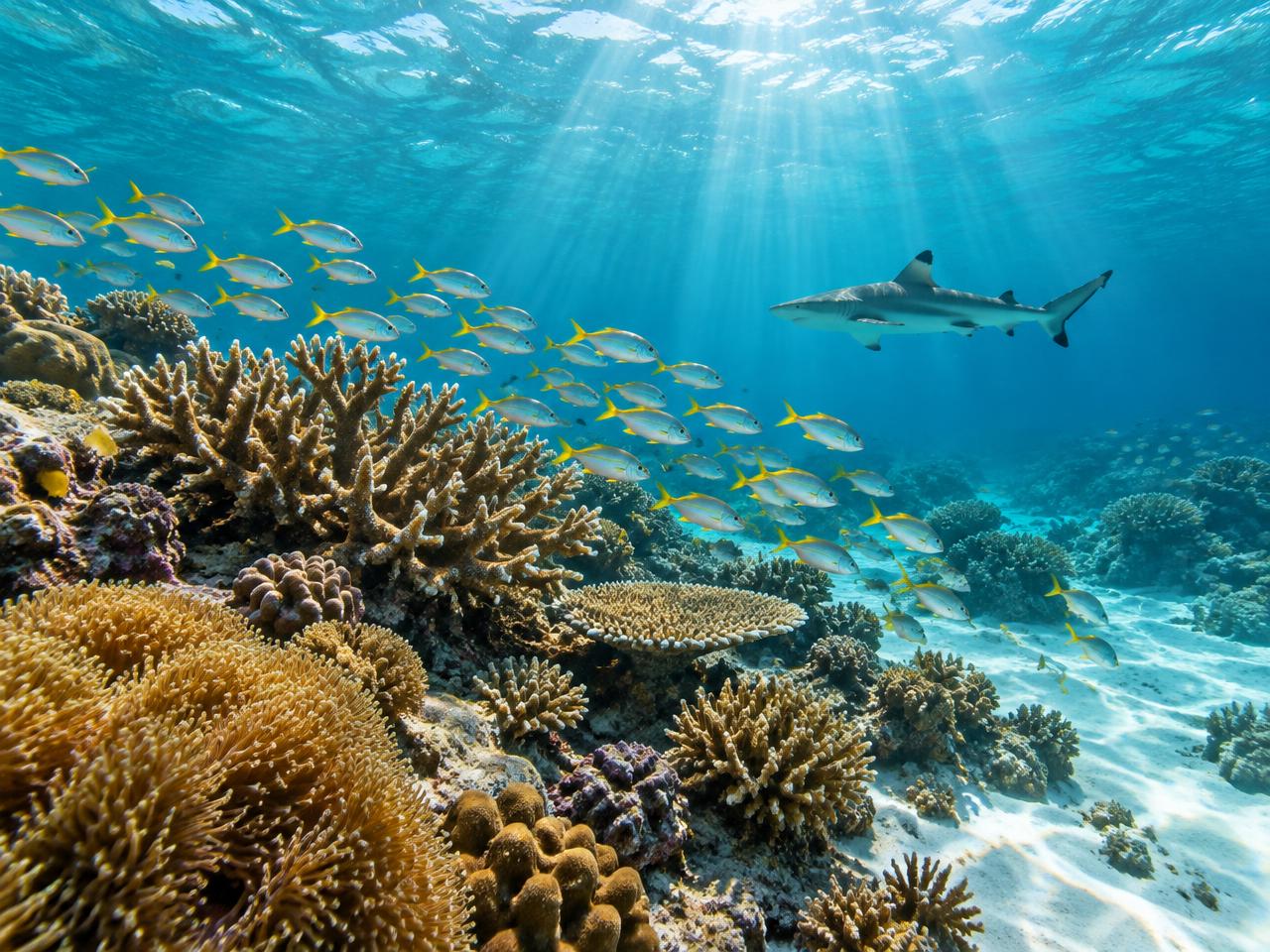
On a typical house reef you'll meet parrotfish crunching the coral, silver fusiliers holding formation in the current, triggerfish guarding a nest with genuine bad humour, and a green or hawksbill turtle grazing the seagrass at the shallow edge. Blacktip reef sharks patrol the drop-off in the shallows, small and unbothered by you. If you're lucky and the tide is right, an eagle ray will glide past like something unhitched from the seabed.
Go early. The first two hours after sunrise are the quietest on the reef and the fish are most active; by eleven the sun is hammering the lagoon flat and the shallow water has warmed. If your resort runs a night snorkel, take it — the reef turns into a different animal after dark, with moray eels, octopus and hunting spiders coming out of the coral.
When we shortlist islands for a keen snorkeller, we ask the resort for photographs taken off their own jetty that month, not the brochure shots from three years ago. Coral grows and bleaches, and a house reef is a living thing. If you tell us snorkelling is the point of the trip, we'll build the whole shortlist around that one question — and we'll tell you honestly when an island's reef isn't the reason to book it.
Written by
The Velana Team
We plan Maldives holidays from our office in Hulhumalé, and we write down what we learn on the way so the next guest travels better.